Road Crossing Safety in Every Environment
 7 min. Read
• Posted
01/29/2026
by
Jeff Venables
7 min. Read
• Posted
01/29/2026
by
Jeff Venables

Enhancing pedestrian safety means understanding the different types of roadway crossings, with their corresponding solutions
Roadway characteristics differ, and the solutions that help vulnerable road users (VRUs) safely navigate them therefore vary. Ideally, transportation agencies could and would deploy the right technology in the right place to maximize public safety and improve mobility.
Four roadway types that call for different traffic safety solutions are:
- Connected, adaptive (dynamic) signalized intersections
- Midblock crossings, including high intensity activated crosswalks (HAWKs)
- Roadways without fixed detection where visibility is needed
- Actuated, smaller and/or rural intersections
Connected, adaptive signals
Busy, modernized arterial intersections benefit from advanced, multimodal detection systems that can fuse HD video, 4D radar, and intelligent analytics to deliver the best accuracy and visibility. Systems such as Iteris Vantage Apex® can detect all vehicle classes, bicycles, and pedestrians through AI driven object classification. An AI engine that can deliver high accuracy should be trained on millions of real world images, classify objects in complex or poorly lit conditions, and provide real-time bounding box visualization on live video.
Bounding boxes are simple rectangles drawn around cars, trucks, bicycles, and pedestrians in a video feed so that TMC staff can see exactly what the AI is detecting. They give instant visual confirmation to traffic operators and confirm that the system is tracking the right objects and classifying them correctly. When detection behaves unexpectedly, bounding boxes also make it easier to spot issues at a glance by helping pinpoint whether the issue is with visibility, classification, or sensor configuration.
Correctly identifying pedestrians with real-time bounding box capability can greatly enhance the safety of VRUs crossing busy arterial intersections. The most advanced systems even include the capability of holding the oncoming traffic signal in a red phase until pedestrians have safely crossed.
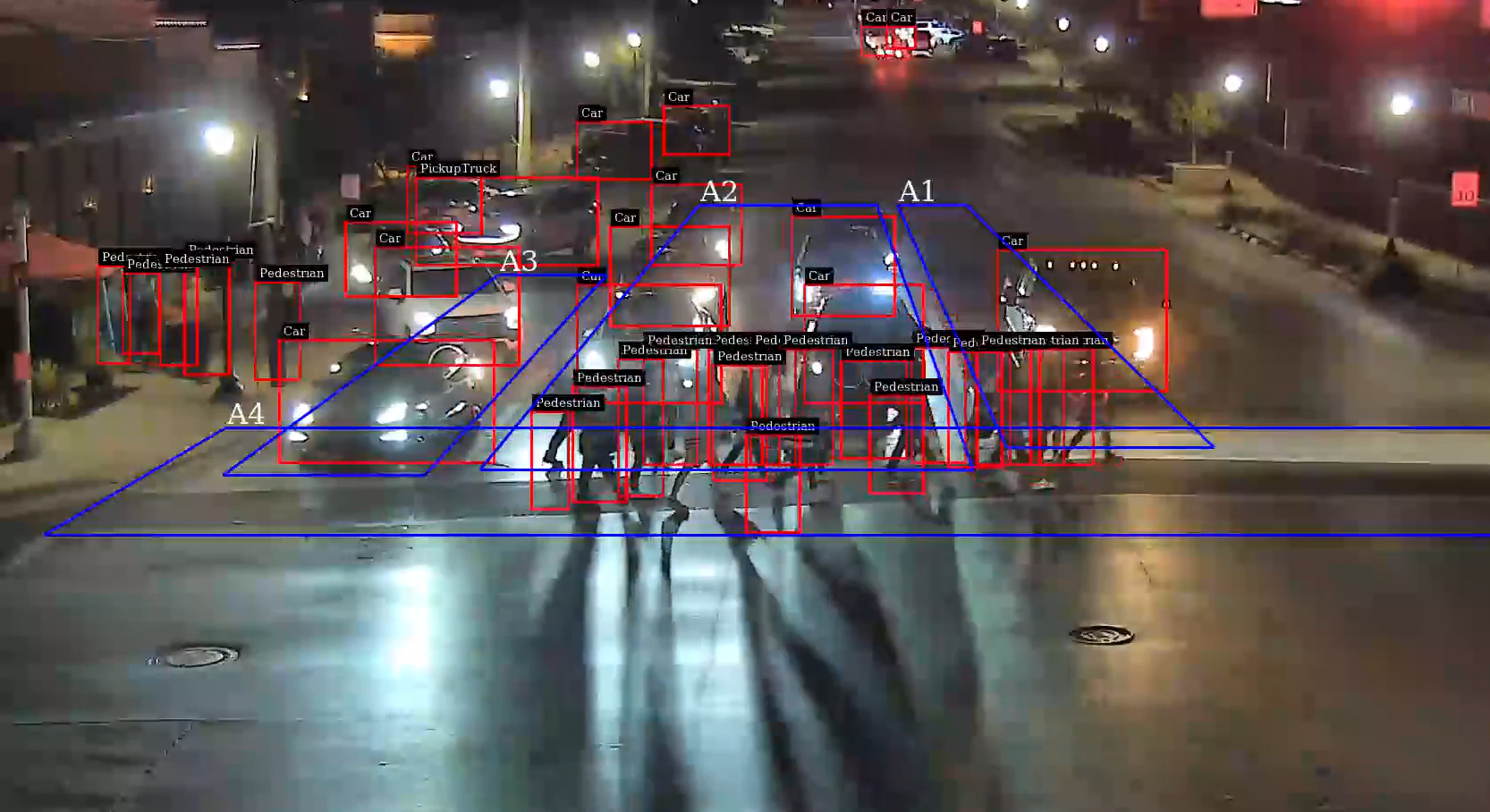 Iteris Vantage AI Pro™ powers Vantage Apex, strengthening object classification and including real-time bounding boxes like these for pedestrians in Mansfield, Texas.
Midblock crossings, including HAWKs
While traffic cameras and sensors have been widely deployed across the U.S. at busy signalized intersections, few ITS detection systems offer traffic pattern and incident intelligence at midblock.
Midblock detection systems are key to protecting VRUs trying to cross in heavily foot-trafficked areas that may also see a high volume of vehicular traffic.
Vantage PedSafe™ is a radar based, all weather pedestrian safety system created for this use case. With this technology, midblock crossings and HAWKs can be transformed into intelligent, adaptive, lifesaving infrastructure. By detecting pedestrians automatically and then triggering real-time protections, solutions like PedSafe can help ensure no one is left in the crosswalk unprotected.
A HAWK is a pedestrian activated traffic signal that stops vehicular traffic using a sequence of yellow and red flashers and solid phases to manage driver behavior before going dark, until the next pedestrian button press.
Iteris deployed Vantage PedSafe at a midblock crossing at Texas State University in San Marcos, Texas, a location characterized by heavy student foot traffic, inconsistent button pushing, and frequent nighttime activity.
The radar based detection monitors the entire crosswalk, activating red signal phase, warning signs, and, at night, supplemental lighting—only when someone is actually crossing. This helps reduce unnecessary driver delays while ensuring pedestrians are seen and protected in real time, even in low visibility conditions.
PedSafe detects pedestrians the moment they step off the curb and clears conflicting traffic only after the crosswalk is fully vacated, rather than the process at a timed crossing that doesn’t take account of slower moving pedestrians.
San Marcos serves as a real world demonstration of how agencies can enhance safety without relying on push buttons or perfect driver awareness at crossings that see unpredictable pedestrian behavior.
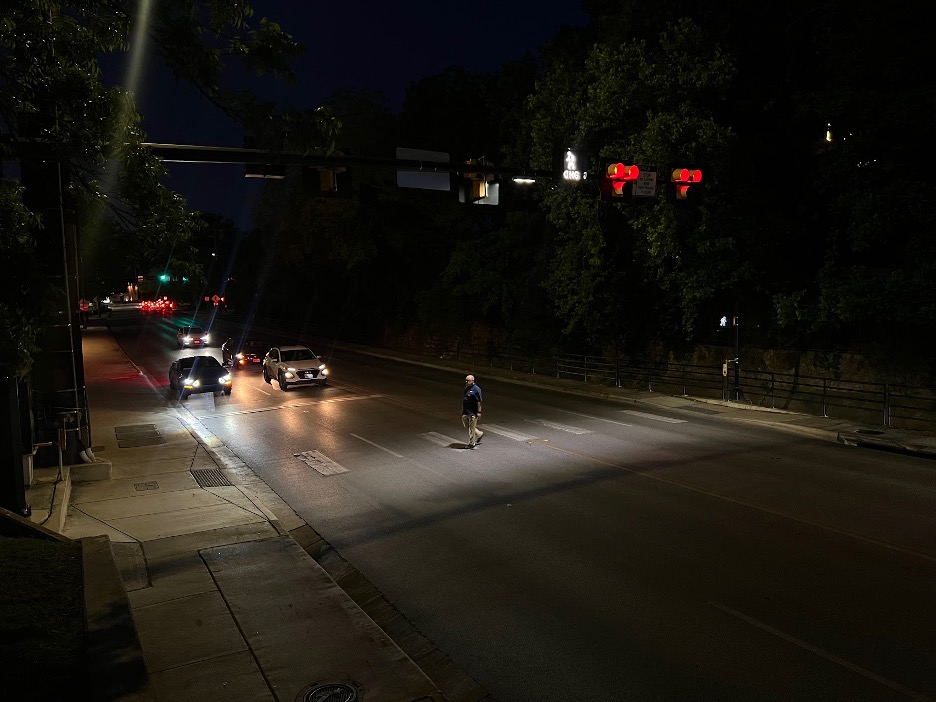 Supplemental lighting activated by Vantage PedSafe illuminates a crossing pedestrian at night for motorists in San Marcos, Texas.
Roadways without fixed detection
Another midblock option that provides visibility on stretches of road without in-field CCTV or sensors is dashboard camera footage from commercial fleet vehicles that can be imported into traffic analytics software. This type of real-time, street level imagery is also well suited to freeways, and provides important information about traffic anomalies and unforeseen incidents without installing a single camera.
Iteris ClearGuide® traffic analytics software supports front-facing timestamped dash cam imagery from tens of thousands of commercial vehicles traveling up to 5 million miles per day. The images are captured every second, and available in real time or up to 10 days historically. The visual data layer confirms incidents, closures, weather events, construction and animal activity, and other disruptions. This cost effective alternative to field hardware is approved in the marketplace of The Eastern Transportation Coalition, a collective of 19 states along the I-95 corridor that assure the quality of data sets for use in traffic analytics.
By validating information from other data sources, such as anonymized vehicle probe data as displayed on congestion and incident map layers within ClearGuide, the visuals collected through fleet dashboard cameras verify—and help identify the exact nature of—mobility issues detected by probe data.
This information also enhances roadway safety by helping alert the traveling public. Dynamic Message Signs (DMS), large electronic roadside displays, can use this information to provide drivers with more accurate real-time insights about congestion, incidents, construction, travel times, and roadway conditions due to fog, flooding, snow and ice.
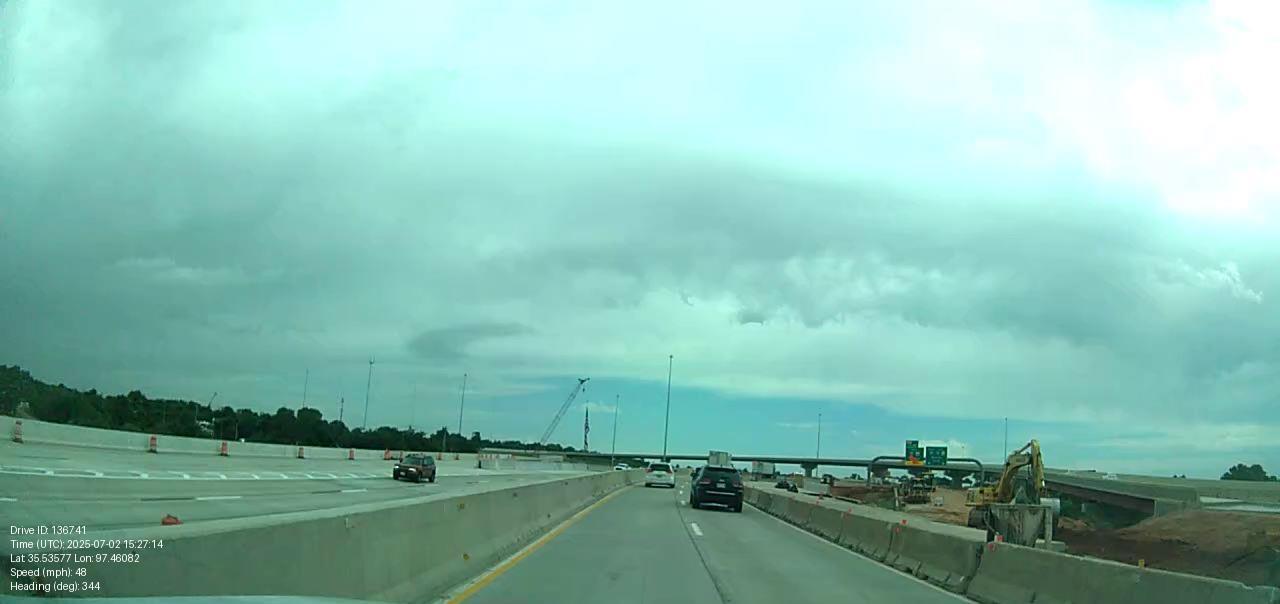 A construction lane-take reducing speeds to 45 mph on I-35 in Oklahoma. ClearGuide displays the image when toggled over to verify the incident is real.
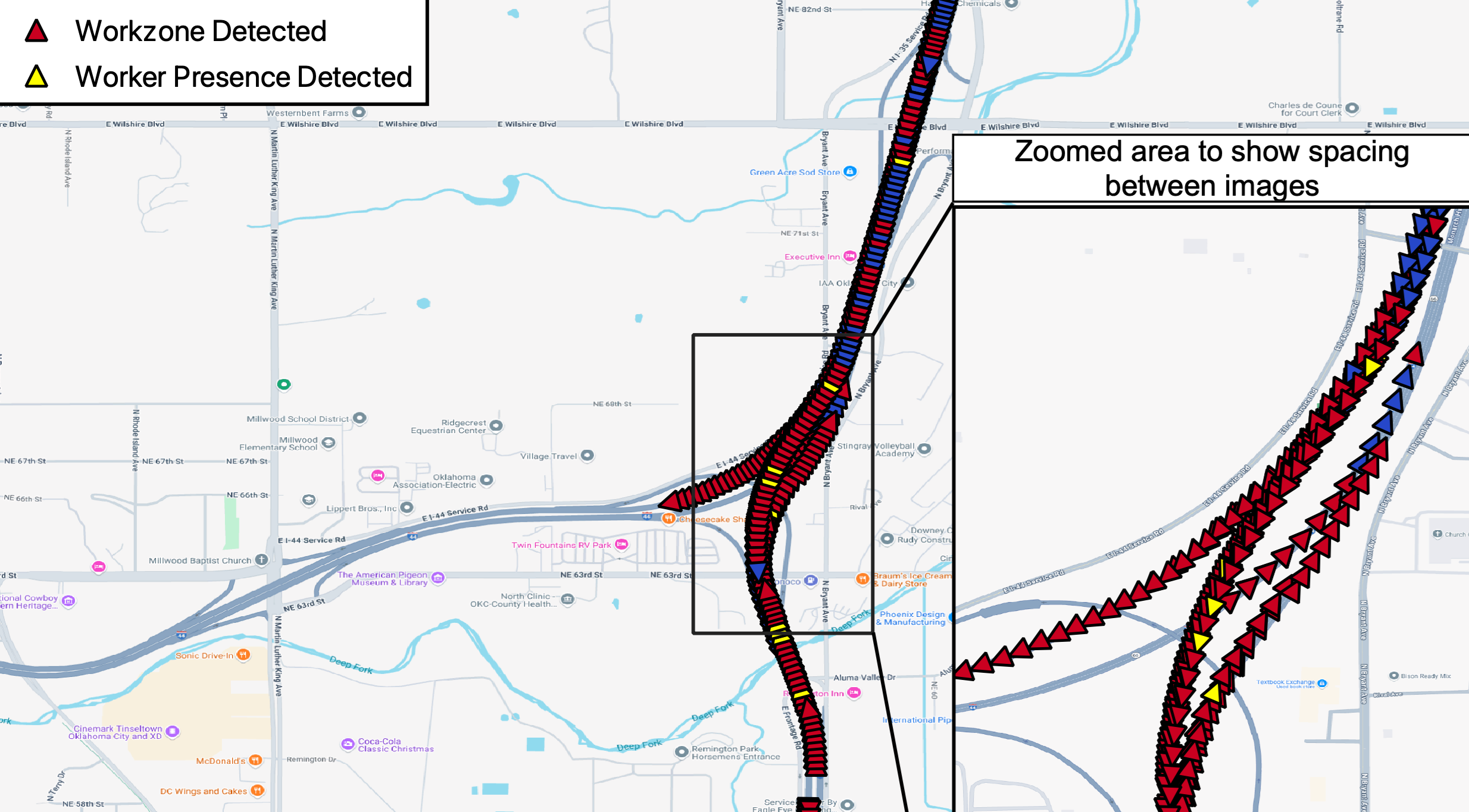 A Daily Work Zone True-False report from July 2025.
Actuated, smaller and/or rural intersections
It is important to recognize that dashboard camera data may not be available in less traveled rural areas due to coverage gaps resulting from typical fleet vehicle routes. Yet many rural roadways are among the most dangerous for pedestrians in the U.S., in part because vehicles often do not expect pedestrians along these roads, and their design does not always take into account the unpredictable patterns of people traveling on foot.
At intersections with sporadic or unpredictable foot traffic, often in rural areas with little to no infrastructure, a single point detection system with pedestrian classification intelligence will likely provide the best and most affordable option to enhance VRU safety. A solution such as Iteris’ VantageNode™ single sensor quad camera is designed for environments where traditional multicamera or cabinet-heavy detection systems are costly or impractical.
The system is purpose built for stop bar presence detection at small intersections, providing accurate actuation without needing racks of processors or multiple sensors. This makes it ideal for semi-actuated intersections transitioning from fixed time, as well as locations where trenching or cable runs aren’t feasible. The high-precision detection mounts directly on a pole, and can identify vehicles, bicycles, and pedestrians across up to three lanes per approach.
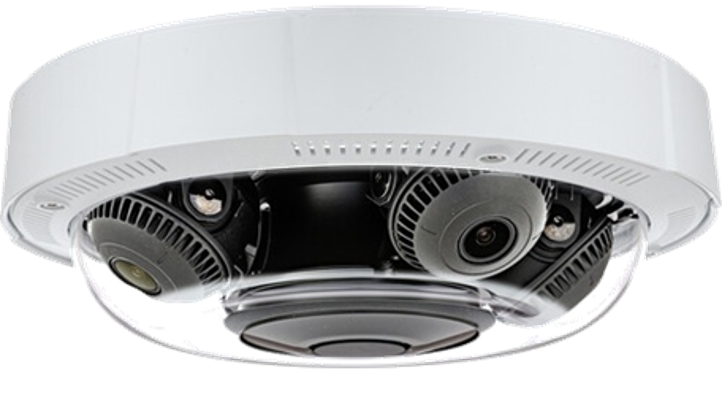 Iteris VantageNode is a compact, pole-mounted detection system that brings modern actuation, data, and analytics to small and rural intersections with minimal infrastructure requirements.
By deploying location-specific technologies—from AI driven multimodal sensors at busy intersections and pedestrian activated midblock options, to versatile dash cam data and cost effective pole-mounted systems for rural roads—transportation agencies can create a more comprehensive safety net for VRUs everywhere. These scalable solutions ensure that every environment, regardless of its infrastructure or traffic volume, becomes significantly safer.
To learn more about pedestrian safety options available for your road crossing environment, please click here.
 X
(Twitter)
X
(Twitter)
 Facebook
 LinkedIn
 Copy
Link
Copy
Link Email
EmailRelated Posts

Prep for and Manage Back-to-School Congestion Changes with Iteris ClearGuide
4
min. Read
• Posted
08/25/2026
by
Jeff Venables

Watch: Why the Future of Transportation Depends on Hardware and Software Working Together
2
min. Read
• Posted
08/11/2026
by
Ahmad Jawad

What’s Driving the DRAM Shortage – And What It Means for Transportation Technology
4
min. Read
• Posted
07/23/2026
by
Todd Kreter